
Resale economics
A price gap is a lead.
Build the case before you buy.
Finding a lower price on one marketplace and a higher price on another can start a useful investigation. The important work is deciding whether those two offers describe a trade your business could actually make.
Start with the list.
Open the comparison.
Select a row to inspect its source assumptions and cost budget. This illustrates the implemented list-to-drawer workflow; it is not an app screenshot, live offer or verified match.
 Logitech M185Wireless mouse · one new itemAmazon US eBay USAssumed buy$7.50Sale reference$20.00Raw price gap$12.50Research candidateInspect ↗
Logitech M185 · comparison example
Wireless mouse · one new item
What needs checking?
The pack and condition above are assumptions. This illustration contains no independent listing identifiers or real listing links; the photograph does not verify either offer.
Work through the assumed costs
- Selling / processing budget
- $2.88
- Advertising
- $1.00
- Shipping & fulfilment
- $3.50
- Storage & financing
- $0.20
- Purchase tax budget
- $0.53
- Returns & overhead
- $0.60
eBay: manually entered example budgets, not an official fee quote.
- Total modeled costs
- $8.71
- Modeled contribution / packBefore income tax
- $3.79
Manual illustration only. Costs stay fixed when you change the selling price; no percentage fees recalculate automatically. Switching channel loads its sample budgets. Add every cost that applies to your business. No source refresh, purchase or sale is performed.
Photo: Hayden Schiff / Wikimedia Commons · CC BY 4.0 · Product photo, independent of the fictional price scenario.
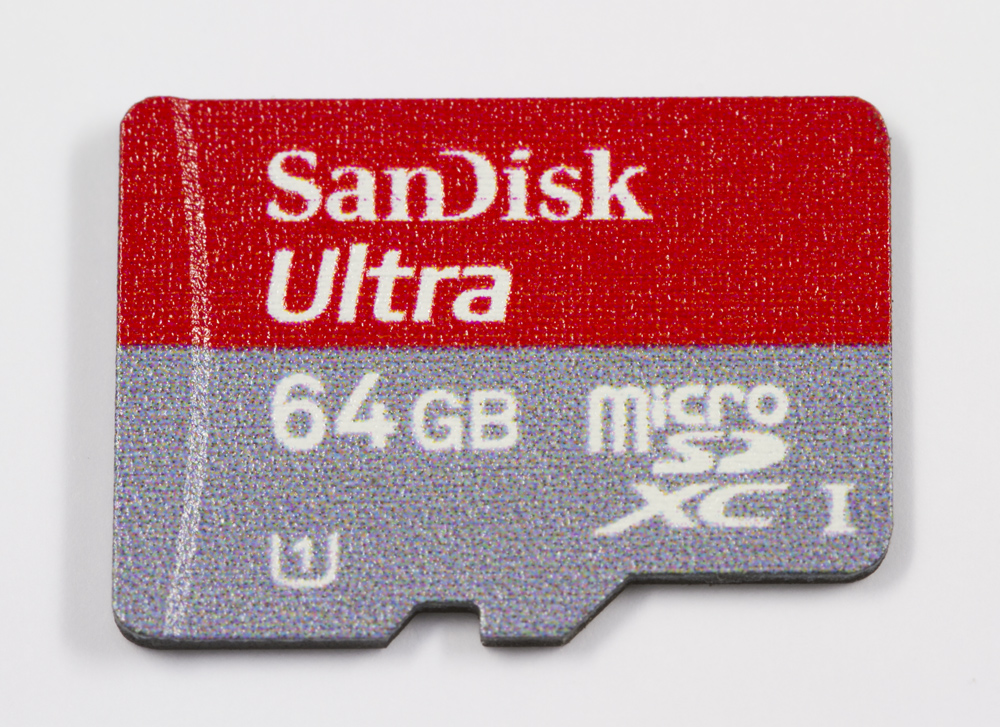 SanDisk Ultra 64GBmicroSDXC card · one new itemAmazon US eBay USAssumed buy$8.00Sale reference$14.90Raw price gap$6.90Research candidateInspect ↗
SanDisk Ultra 64GB · comparison example
microSDXC card · one new item
What needs checking?
The pack and condition above are assumptions. This illustration contains no independent listing identifiers or real listing links; the photograph does not verify either offer.
Work through the assumed costs
- Selling / processing budget
- $2.30
- Advertising
- $0.75
- Shipping & fulfilment
- $3.50
- Storage & financing
- $0.15
- Purchase tax budget
- $0.56
- Returns & overhead
- $0.50
eBay: manually entered example budgets, not an official fee quote.
- Total modeled costs
- $7.76
- Modeled loss / packBefore income tax
- -$0.86
Manual illustration only. Costs stay fixed when you change the selling price; no percentage fees recalculate automatically. Switching channel loads its sample budgets. Add every cost that applies to your business. No source refresh, purchase or sale is performed.
Photo: Afrank99 / Wikimedia Commons · CC BY-SA 3.0 · Product photo, independent of the fictional price scenario.
Logitech M185One item / two-item bundleAmazon US eBay USAssumed buy$7.50Sale reference$29.90Raw price gap$22.40Review the packInspect ↗
Logitech M185 · comparison example
One item / two-item bundle
What needs checking?
The pack and condition above are assumptions. This illustration contains no independent listing identifiers or real listing links; the photograph does not verify either offer.
One mouse and a two-mouse bundle are not an equivalent pack. The raw price difference is visible, but no contribution is calculated. Find a comparable offer before modeling costs.
Manual illustration only. Costs stay fixed when you change the selling price; no percentage fees recalculate automatically. Switching channel loads its sample budgets. Add every cost that applies to your business. No source refresh, purchase or sale is performed.
Photo: Hayden Schiff / Wikimedia Commons · CC BY 4.0 · Product photo, independent of the fictional price scenario.
All prices, record dates and budgets are fictional USD examples. They are not current prices for these products, achieved returns or sales forecasts.
Make sure the comparison survives a closer look.
Begin with the selling unit. A six-pack and a twelve-pack do not become equivalent because their titles contain the same product name. Check model, variant, pack quantity, included accessories and condition. A refurbished item needs a different assessment from a new one.
Keep the listing source and capture time beside each price. A stored observation is not a checkout quote, and an identifier supplied to a search is not independent evidence from both listings. Open the original sources before relying on the comparison.
Put the costs between the two prices.
In the fictional interface example above, the purchase reference is $29.90 and the planned sale is $42.90: a $13 price gap. Estimated additional costs total $24.02, leaving an $11.02 loss per pack before income tax. The higher selling price does not cover the modeled trade.
A second fictional, complete-budget example shows why a positive gap is not enough: buy for $10 and plan an eBay sale at $40. The example profile assigns $21.36 to other costs, leaving $8.64 before income tax. With the same buy/sell assumptions, the own-website example assigns $16.54 to costs and leaves $13.46. These use different fee and advertising bases; they are not an equal-access sales comparison or proof that a website sale is more profitable. At $10 purchase and $11 planned eBay sale, the same profile leaves a $14.01 loss. No customer made these transactions.
The actual application separates selling fees, advertising, shipping and fulfillment, storage and finance, purchase tax, returns and overhead. Inspect the applicable fee profile and assumptions rather than copying the example budgets. A percentage-based charge can change with the planned selling price; a fixed cost follows its own basis. The screenshot is a research example, not a current marketplace tariff or customer outcome.
Separate a unit model from an inventory decision.
A positive modeled contribution does not establish available supply, selling permission or demand at your planned price. It also says little about how long your money could remain tied up. Explore a quantity scenario only after making those assumptions explicit.
The application’s default hundred-pack quantity is a starting assumption, not a recommended order or a monthly sales forecast. Replacing it with a number that fits your capital constraints still does not turn it into measured demand.
Use the research to decide what happens next.
Marketz brings candidate comparisons, product evidence, cost exploration and ongoing tracking into the same research workflow. That can help you reject a weak lead early or identify the exact question to ask a supplier.
Record the unresolved questions before purchasing: identity, current source price, complete costs, account restrictions and realistic sell-through. The useful outcome is a better-supported decision, including a decision to pass. Modeled contribution is not realized business profit.
Product scope checked against the Marketz implementation and Hubz catalog on 1 November 2026.