
Product
Investigate the candidate.
Then test the economics.
The candidate list gives you a place to begin. Product evidence, source dates and your own cost assumptions determine whether the apparent relationship deserves a buying discussion.
Search and classify candidates within the implemented research index.
Review original source identifiers and selling-unit evidence.
Evaluate cost and inventory assumptions before committing capital.
Start with the list.
Open the comparison.
Select a row to inspect its source assumptions and cost budget. This illustrates the implemented list-to-drawer workflow; it is not an app screenshot, live offer or verified match.
 Logitech M185Wireless mouse · one new itemAmazon US eBay USAssumed buy$7.50Sale reference$20.00Raw price gap$12.50Research candidateInspect ↗
Logitech M185 · comparison example
Wireless mouse · one new item
What needs checking?
The pack and condition above are assumptions. This illustration contains no independent listing identifiers or real listing links; the photograph does not verify either offer.
Work through the assumed costs
- Selling / processing budget
- $2.88
- Advertising
- $1.00
- Shipping & fulfilment
- $3.50
- Storage & financing
- $0.20
- Purchase tax budget
- $0.53
- Returns & overhead
- $0.60
eBay: manually entered example budgets, not an official fee quote.
- Total modeled costs
- $8.71
- Modeled contribution / packBefore income tax
- $3.79
Manual illustration only. Costs stay fixed when you change the selling price; no percentage fees recalculate automatically. Switching channel loads its sample budgets. Add every cost that applies to your business. No source refresh, purchase or sale is performed.
Photo: Hayden Schiff / Wikimedia Commons · CC BY 4.0 · Product photo, independent of the fictional price scenario.
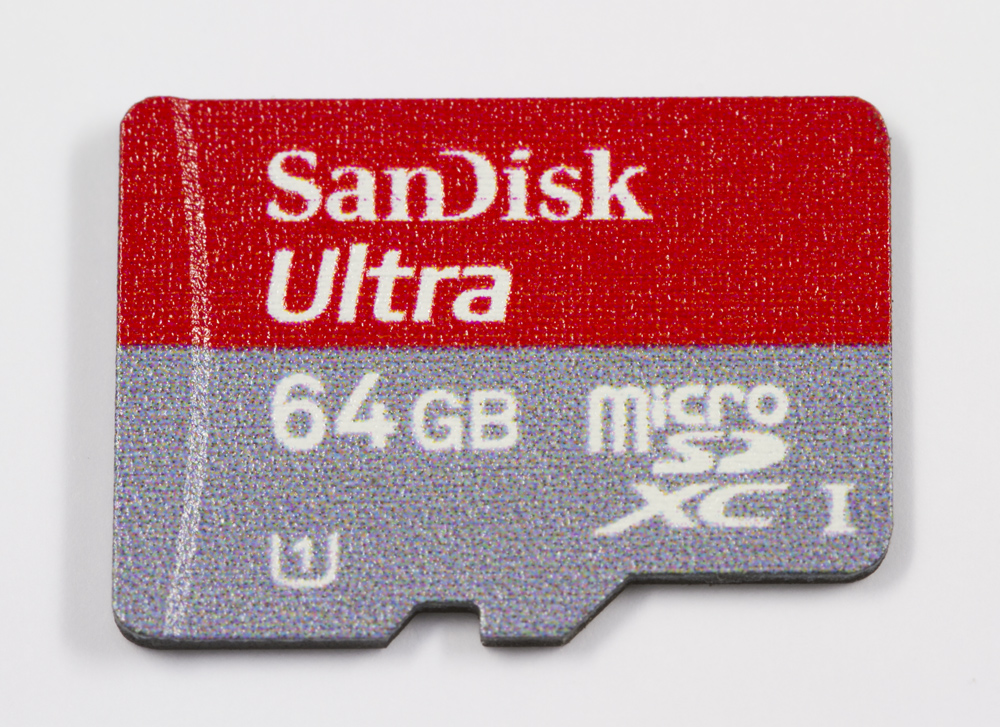 SanDisk Ultra 64GBmicroSDXC card · one new itemAmazon US eBay USAssumed buy$8.00Sale reference$14.90Raw price gap$6.90Research candidateInspect ↗
SanDisk Ultra 64GB · comparison example
microSDXC card · one new item
What needs checking?
The pack and condition above are assumptions. This illustration contains no independent listing identifiers or real listing links; the photograph does not verify either offer.
Work through the assumed costs
- Selling / processing budget
- $2.30
- Advertising
- $0.75
- Shipping & fulfilment
- $3.50
- Storage & financing
- $0.15
- Purchase tax budget
- $0.56
- Returns & overhead
- $0.50
eBay: manually entered example budgets, not an official fee quote.
- Total modeled costs
- $7.76
- Modeled loss / packBefore income tax
- -$0.86
Manual illustration only. Costs stay fixed when you change the selling price; no percentage fees recalculate automatically. Switching channel loads its sample budgets. Add every cost that applies to your business. No source refresh, purchase or sale is performed.
Photo: Afrank99 / Wikimedia Commons · CC BY-SA 3.0 · Product photo, independent of the fictional price scenario.
Logitech M185One item / two-item bundleAmazon US eBay USAssumed buy$7.50Sale reference$29.90Raw price gap$22.40Review the packInspect ↗
Logitech M185 · comparison example
One item / two-item bundle
What needs checking?
The pack and condition above are assumptions. This illustration contains no independent listing identifiers or real listing links; the photograph does not verify either offer.
One mouse and a two-mouse bundle are not an equivalent pack. The raw price difference is visible, but no contribution is calculated. Find a comparable offer before modeling costs.
Manual illustration only. Costs stay fixed when you change the selling price; no percentage fees recalculate automatically. Switching channel loads its sample budgets. Add every cost that applies to your business. No source refresh, purchase or sale is performed.
Photo: Hayden Schiff / Wikimedia Commons · CC BY 4.0 · Product photo, independent of the fictional price scenario.
All prices, record dates and budgets are fictional USD examples. They are not current prices for these products, achieved returns or sales forecasts.
Use the candidate list to prioritize inspection.
Search and filter available comparisons by research classification and supported direction. A common modeled yardstick helps organize the list; open a candidate to see why the relationship was surfaced.
A same-pack candidate can support manual cost exploration while its identity, comparability and automatic scenario verification remain unconfirmed. A strict cross-market comparison may legitimately show no verified rows. The candidate is not a supplier reservation, selling permission or confirmed profitable trade. Missing information, a known conflict and a rejected match should lead to different next steps.
Check what would actually change hands.
Review the original identifiers reported by each source, alongside separately labeled normalized equivalents. Then inspect model, variant, pack quantity, content measure and condition. A lookup code copied into a record is not an independent identifier from both listings.
For example, one six-pack at $18 cannot directly fulfill a twelve-pack offer at $30. Two six-packs would cost $36 before other expenses. This fictional example explains the selling-unit check; it does not describe an automatic repacking feature.
Model the costs your trade would incur.
The application supports editable selling-channel and fulfillment assumptions, including applicable fees, advertising, shipping, receiving, storage, finance, tax, returns and operating allocations. Inspect each basis instead of treating a default as your actual business cost.
Keep a planned selling price separate from a captured purchase reference and observed marketplace indicators. Quantity and holding-period assumptions help examine capital exposure; the default hundred packs are not a recommended order or a demand forecast.
Decide what needs verification next.
Choose Amazon, eBay or Own website as the selling channel. For your own site, the planned price is carried over as an assumption, not an observed website offer. Marketplace commission is zero in that channel; editable payment-processing, advertising, delivery, returns and operating budgets still apply. The example processing budget is 2.9% of sale plus customer sales tax, plus $0.30; it is not a connected payment-provider quote.
Keep three price bases separate: the latest captured marketplace reference, a qualified historical average when enough observations exist, and your own planned price. A qualified average can inform an explicitly chosen assumption; it is not a future selling price or an automatic guarantee of a complete cost scenario.
In the fictional screenshot, a $42.90 planned sale minus the $29.90 purchase reference and $24.02 of estimated other costs leaves an $11.02 loss per pack before income tax. Changing an input changes the estimate; it does not establish that a unit will sell on those terms.
Use the result to investigate the source, negotiate a cost, test another fulfillment route or set the candidate aside. Recheck availability, account terms and selling eligibility independently. Continue tracking an interesting record when timing or price changes may alter the research.
ILLUSTRATIVE DECISION CASE
Turn a price gap into a buying decision.
Assume the same selling unit costs $20 to acquire. A planned $40 sale can still lose money after the other costs. Compare channels and a lower selling price before placing an order.
| Assumption / pack | Marketplace plan | Lower selling price | Own website |
|---|---|---|---|
| Purchase price | $20.00 | $20.00 | $20.00 |
| Planned selling price | $40.00 | $36.00 | $40.00 |
| Other cost budget | $22.38 | $22.38 | $18.00 |
| Contribution before income tax | -$2.38 | -$6.38 | $2.00 |
What is inside the cost budget?
The marketplace budget assumes $6 shipping, $5.50 selling fees, $4 advertising, $2 returns, $1 storage/financing, $1.40 purchase tax and $2.48 other overhead. The website budget assumes $1.46 payment processing, $5 advertising, $6 shipping, $2 returns, $1 storage/financing, $1.40 purchase tax and $1.14 other overhead.
What changes in the buying discussion?
At a $40 sale with $22.38 in other costs, the break-even purchase price is $17.62. For 100 packs, purchase cost is $2,000 and other budgeted costs total $2,238. Even if every pack sells at the planned price, modeled contribution is −$238. That gives you a concrete purchase-price target to negotiate, or a reason to pass.
Every value is a manually constructed USD assumption. The lower-price column holds the cost budget fixed; recalculate percentage charges in your own case. The website outcome depends on actual orders and the assumed acquisition and delivery costs. The 100-pack example is a budget illustration.
Questions about this workflow
Does the strongest candidate label mean the deal is verified?
No. Inspect the original sources and the identity, pack, condition and timing evidence. Research qualification is not trade confirmation.
Is contribution the same as my net profit?
No. Contribution is planned sale minus purchase and all included modeled costs, before income tax. Positive contribution is not realized net profit. A blank required cost remains unknown; a complete total and contribution are withheld until the required inputs are valid.