
Solutions
Build a sourcing case
you can come back to.
Connect the first product search to the later review. A promising gap, a stock question and a stale observation need different investigations; Marketz gives each a route back to the product.
Narrow discovery into a specific product and candidate shortlist.
Check selling-unit evidence and applicable costs before buying.
Use tracked history, portfolio priorities and reports to revisit assumptions.
Start with the list.
Open the comparison.
Select a row to inspect its source assumptions and cost budget. This illustrates the implemented list-to-drawer workflow; it is not an app screenshot, live offer or verified match.
 Logitech M185Wireless mouse · one new itemAmazon US eBay USAssumed buy$7.50Sale reference$20.00Raw price gap$12.50Research candidateInspect ↗
Logitech M185 · comparison example
Wireless mouse · one new item
What needs checking?
The pack and condition above are assumptions. This illustration contains no independent listing identifiers or real listing links; the photograph does not verify either offer.
Work through the assumed costs
- Selling / processing budget
- $2.88
- Advertising
- $1.00
- Shipping & fulfilment
- $3.50
- Storage & financing
- $0.20
- Purchase tax budget
- $0.53
- Returns & overhead
- $0.60
eBay: manually entered example budgets, not an official fee quote.
- Total modeled costs
- $8.71
- Modeled contribution / packBefore income tax
- $3.79
Manual illustration only. Costs stay fixed when you change the selling price; no percentage fees recalculate automatically. Switching channel loads its sample budgets. Add every cost that applies to your business. No source refresh, purchase or sale is performed.
Photo: Hayden Schiff / Wikimedia Commons · CC BY 4.0 · Product photo, independent of the fictional price scenario.
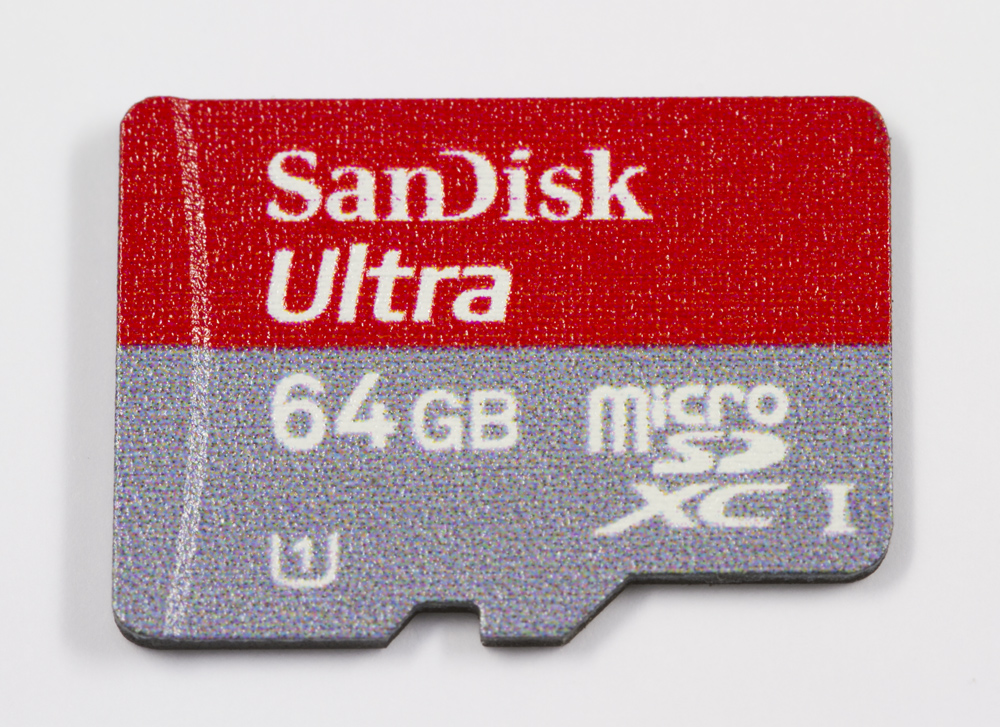 SanDisk Ultra 64GBmicroSDXC card · one new itemAmazon US eBay USAssumed buy$8.00Sale reference$14.90Raw price gap$6.90Research candidateInspect ↗
SanDisk Ultra 64GB · comparison example
microSDXC card · one new item
What needs checking?
The pack and condition above are assumptions. This illustration contains no independent listing identifiers or real listing links; the photograph does not verify either offer.
Work through the assumed costs
- Selling / processing budget
- $2.30
- Advertising
- $0.75
- Shipping & fulfilment
- $3.50
- Storage & financing
- $0.15
- Purchase tax budget
- $0.56
- Returns & overhead
- $0.50
eBay: manually entered example budgets, not an official fee quote.
- Total modeled costs
- $7.76
- Modeled loss / packBefore income tax
- -$0.86
Manual illustration only. Costs stay fixed when you change the selling price; no percentage fees recalculate automatically. Switching channel loads its sample budgets. Add every cost that applies to your business. No source refresh, purchase or sale is performed.
Photo: Afrank99 / Wikimedia Commons · CC BY-SA 3.0 · Product photo, independent of the fictional price scenario.
Logitech M185One item / two-item bundleAmazon US eBay USAssumed buy$7.50Sale reference$29.90Raw price gap$22.40Review the packInspect ↗
Logitech M185 · comparison example
One item / two-item bundle
What needs checking?
The pack and condition above are assumptions. This illustration contains no independent listing identifiers or real listing links; the photograph does not verify either offer.
One mouse and a two-mouse bundle are not an equivalent pack. The raw price difference is visible, but no contribution is calculated. Find a comparable offer before modeling costs.
Manual illustration only. Costs stay fixed when you change the selling price; no percentage fees recalculate automatically. Switching channel loads its sample budgets. Add every cost that applies to your business. No source refresh, purchase or sale is performed.
Photo: Hayden Schiff / Wikimedia Commons · CC BY 4.0 · Product photo, independent of the fictional price scenario.
All prices, record dates and budgets are fictional USD examples. They are not current prices for these products, achieved returns or sales forecasts.

Start with your buying criteria.
Choose the product area, supported source and operating constraints you can actually serve. Use discovery or search to find records, then inspect the model, pack, condition and captured offer context.
Keep the shortlist manageable. A higher observed price elsewhere does not establish available supply or an achievable sale. The first useful outcome may be knowing which supplier question to ask.
Open the candidate, not just the percentage.
Review original source identifiers, normalized equivalents, package quantities and dates. Missing evidence and known contradictions should remain different states.
Investigate the unit you would deliver. Two six-packs needed for a twelve-pack order change the purchase basis before fees are added. Do not silently turn a package mismatch into an equivalent trade.
Test unit costs and inventory assumptions.
Enter the applicable selling, fulfillment, advertising, holding, finance, tax, returns and operating allocations. Model quantity and holding period without treating either as observed monthly demand.
A hundred-pack default is a scenario starting point, not an instruction. Use your actual sourcing and cash constraints and check whether a positive unit contribution still makes sense as an inventory commitment.
Decide what to review again.
Track selected listings and organize them with tags. Portfolio Insights, brand/seller/category views and available action priorities help identify which records need a pricing, stock or evidence-quality review.
Use a scoped report to share the selected group, then open the source when a movement matters. The next action may be a new cost input, a supplier conversation or a decision to pass. Marketz does not execute purchases or reprice inventory.
ILLUSTRATIVE DECISION CASE
Turn a price gap into a buying decision.
Assume the same selling unit costs $20 to acquire. A planned $40 sale can still lose money after the other costs. Compare channels and a lower selling price before placing an order.
| Assumption / pack | Marketplace plan | Lower selling price | Own website |
|---|---|---|---|
| Purchase price | $20.00 | $20.00 | $20.00 |
| Planned selling price | $40.00 | $36.00 | $40.00 |
| Other cost budget | $22.38 | $22.38 | $18.00 |
| Contribution before income tax | -$2.38 | -$6.38 | $2.00 |
What is inside the cost budget?
The marketplace budget assumes $6 shipping, $5.50 selling fees, $4 advertising, $2 returns, $1 storage/financing, $1.40 purchase tax and $2.48 other overhead. The website budget assumes $1.46 payment processing, $5 advertising, $6 shipping, $2 returns, $1 storage/financing, $1.40 purchase tax and $1.14 other overhead.
What changes in the buying discussion?
At a $40 sale with $22.38 in other costs, the break-even purchase price is $17.62. For 100 packs, purchase cost is $2,000 and other budgeted costs total $2,238. Even if every pack sells at the planned price, modeled contribution is −$238. That gives you a concrete purchase-price target to negotiate, or a reason to pass.
Every value is a manually constructed USD assumption. The lower-price column holds the cost budget fixed; recalculate percentage charges in your own case. The website outcome depends on actual orders and the assumed acquisition and delivery costs. The 100-pack example is a budget illustration.
Questions about this workflow
Does Marketz purchase or sell inventory for me?
No. The documented workflow supports research and review; it does not execute sourcing orders, publish offers or reprice them.
Can I share a selected cohort rather than the whole Watchlist?
Supported scoped reports and CSV help focus on a selected group. Review their actual contents and delivery readiness.